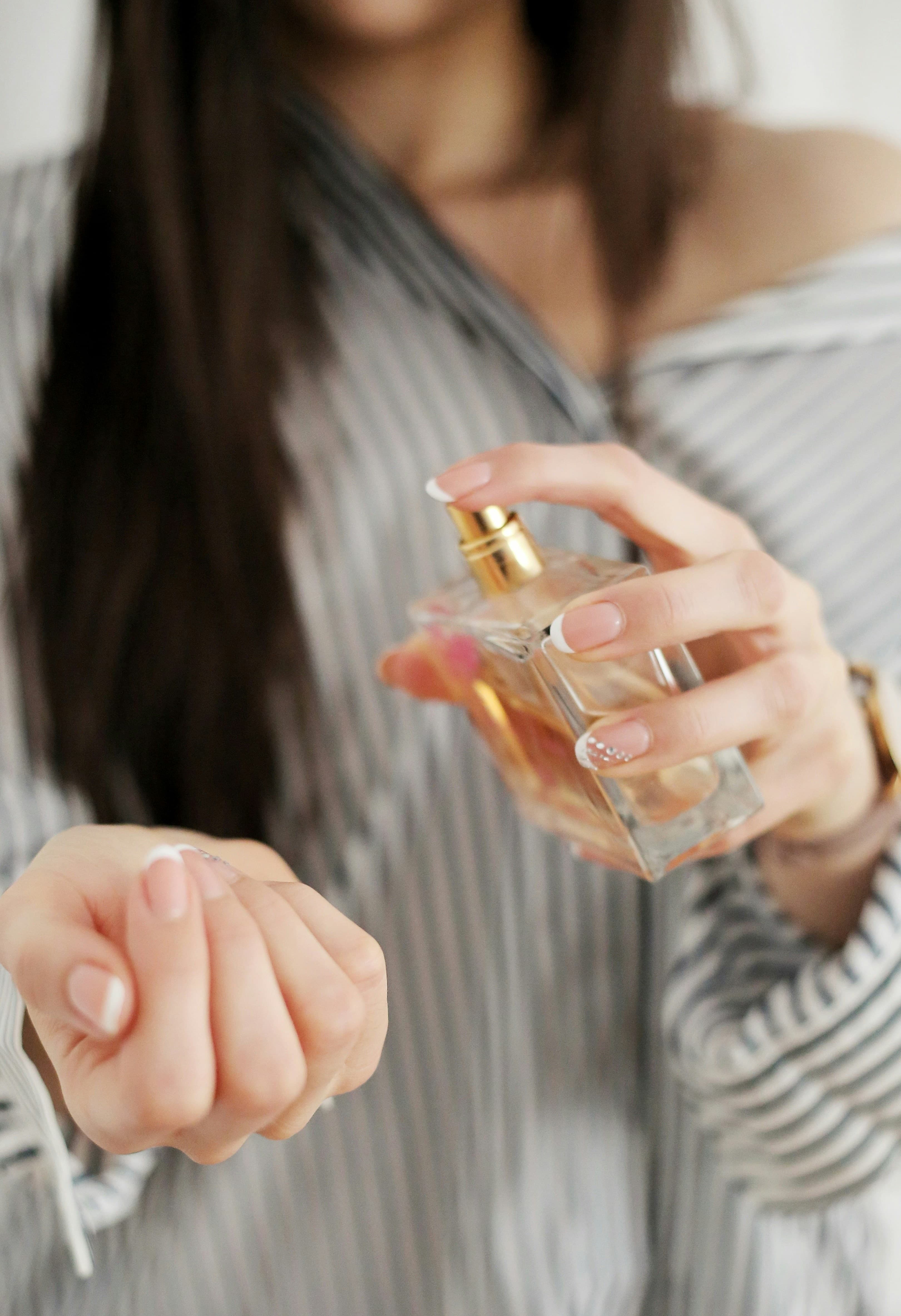
Many people view perfume as merely the finishing touch before starting their day, but the way we use it greatly affects its longevity and scent profile. Spraying too much perfume can be overpowering, while using too little may mean it isn’t noticeable at all.
This article discusses the proper way to use perfume: from understanding the different types of perfume, choosing the right application points, to etiquette for wearing it in various situations such as the office, formal events, and casual occasions.
1. First, Understand the Different Types of Perfume
Before discussing how to apply perfume, it’s important to understand that each type of perfume has a different fragrance concentration. This directly affects the longevity and intensity of the scent.
-
Eau de Cologne (EDC)
The lightest fragrance concentration (about 2–5%). The scent is fresh but doesn’t last very long, averaging 1–2 hours. Suitable for casual use or reapplying several times a day. -
Eau de Toilette (EDT)
Medium concentration (about 5–15%). This is the most common type used for daily activities. Lasts approximately 3–5 hours, depending on skin type and environment. -
Eau de Parfum (EDP)
Higher concentration (about 15–20%) with a longevity of 5–8 hours or more. The scent tends to be richer and feels more “deep.” -
Parfum/Extrait
The highest concentration. Usually applied sparingly to specific spots because the scent is very strong and long-lasting.
If you’re using EDP, the ideal number of sprays is usually fewer than for EDT or EDC, because the scent intensity is already higher.
2. Choose the Right Spray Spots
Perfume works best on warm areas of the body with good blood circulation. These spots help the scent linger throughout the day.
Recommended spray spots:
- Behind the ears or on the sides of the neck
- The inner wrists
- The inner elbow creases
- The back of the neck (nape)
- Upper chest
You don’t need to apply it to all these spots at once. For daily activities, a combination of 2–4 spots is sufficient, depending on the perfume’s strength and the environment you’ll be in.
3. Proper Distance and Spraying Technique
A common mistake is spraying the perfume too close, causing the liquid to pool and not spread evenly. The proper method:
- Hold the perfume bottle about 10–20 cm away from your skin.
- Spray 1–2 times on each selected spot.
- Let the perfume dry on its own; do not rub it in.
Rubbing your wrists after spraying can disrupt the molecular structure of the fragrance, causing the transition from top notes to base notes to be less smooth.
4. Perfume and Skin: Prepare a Clean “Canvas”
Perfume works best on clean, moisturized skin. Here are a few simple tips:
- Apply perfume after showering, when your skin is clean and your pores are still slightly open. This helps the scent cling better.
- Use body lotion without a strong scent (unscented or neutral) before applying perfume. Moisturized skin helps the perfume last longer.
- Avoid mixing too many strongly scented products (soap, lotion, hair mist, and perfume) that clash with each other.
5. What’s the Ideal Number of Sprays?
There’s no one-size-fits-all number, but as a general guideline:
- Office / formal settings: 2–4 light sprays on pulse points (e.g., neck and wrists).
- Casual outdoor activities: 3–6 sprays, depending on the perfume’s strength and how quickly the scent “blows away.”
- Evening events / outdoor: You can use a little more, but still be mindful of your distance from others.
As a general rule, it’s better for people around you to catch a whiff of the scent when they’re close by, rather than smelling your perfume from several meters away.
6. Ethics of Wearing Perfume in Various Situations
In addition to technical considerations, there are also ethical aspects to keep in mind:
- At the office or in enclosed spaces: use a subtle, non-overpowering perfume. Avoid overuse, as it can bother coworkers, especially those who are sensitive to certain scents.
- On public transportation: try to keep the scent from being too strong. Confined spaces make scents feel more intense.
- Formal events or business meetings: choose a perfume with a clean, professional character, and one that isn’t too sweet or too gourmand.
- Evening or social events: You can experiment with more “statement” perfumes, as long as you remain mindful of the comfort of those around you.
7. Layering Perfumes: It’s Okay, but Do It Wisely
Layering or combining several scents at once-can create a unique and more personal fragrance. However, it takes a little practice:
- Start by combining your main perfume with a lotion or body mist that has a complementary scent.
- Avoid mixing too many perfumes with very different characteristics (for example, a heavy gourmand scent with a super-fresh citrus one) unless you already know the final result.
- Test the combination at home first and see how the scent evolves after 1–2 hours before wearing it to an important event.
8. How to Store Perfume So It Doesn’t Go Bad Quickly
Perfume stored properly will retain its scent longer:
- Store it in a cool, dry place, away from direct sunlight.
- Avoid storing it in a humid bathroom where the temperature fluctuates frequently.
- Close the bottle tightly after use.
- If the perfume has changed color drastically or smells sour or strange, it has most likely under gone oxidation.
9. Common Mistakes to Avoid
- Spraying perfume on clothing made of sensitive fabrics that stain easily.
- Rubbing your wrists after spraying.
- Spraying too much from a close distance, causing the scent to “hit” those around you.
- Constantly reapplying perfume every time you feel you can’t smell it on yourself. Remember, your nose can “get used to” the scent you’re wearing.
Conclusion
Using perfume properly isn’t just about choosing a brand or scent type, but also about application techniques, the right amount, and etiquette toward those around you. By understanding the basics above, you can maximize the perfume’s character while ensuring the comfort of those around you.
If you want to explore further, you can start experimenting with different concentrations (EDT, EDP, etc.), try layering in simple ways, and observe how the same perfume can smell different on everyone’s skin.